
Helping Parents Navigate the IEP Process with Confidence
The special education process can be complicated. Evaluations, eligibility criteria, IEP goals, accommodations, services, and educational terminology can make it difficult for parents to know whether their child’s needs are being fully understood and addressed.
Provident Pathways offers individualized Special Education and IEP Consultation Services for parents who want professional guidance in understanding their child’s educational needs and participating effectively in the IEP process.
With a background in school psychology and psychological assessment, we help parents understand both the clinical and educational information involved in special education decision-making. Our role is to provide knowledgeable, objective consultation so you can approach meetings and decisions with greater clarity and confidence.

Independent, Parent-Focused Guidance
Our consultation services are designed to help parents become informed and effective participants in the special education process.
We do not replace the role of your child’s IEP team, and consultation is not legal representation. Instead, we provide an independent psychological and educational perspective that can help you understand the information being presented, consider available options, and communicate your concerns more effectively.
Our approach emphasizes collaboration, problem-solving, and the individual needs of the student.
How We Can Help
IEP Review
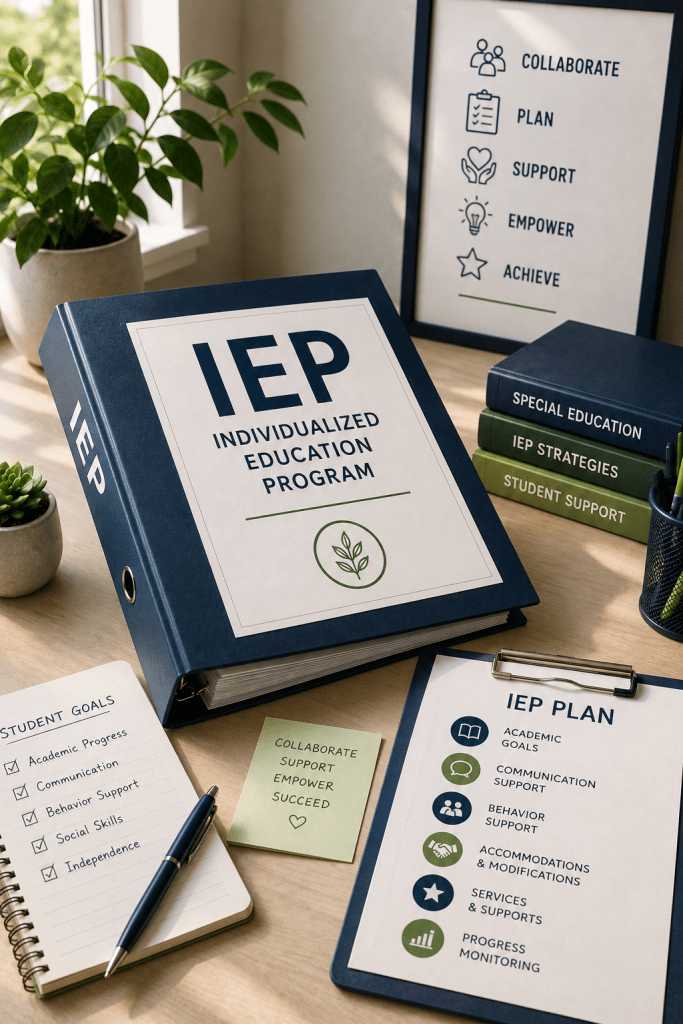
We can review your child’s current or proposed IEP and help you understand its major components, including:
- Present levels of academic and functional performance
- Eligibility and areas of educational need
- Annual goals
- Accommodations and modifications
- Special education and related services
- Service frequency and duration
- Progress monitoring
- Educational placement
We can also help identify questions or areas you may want to discuss with the IEP team.
Psychoeducational Assessment Review
Psychological and educational evaluations often contain valuable information, but the terminology and test results can be difficult to interpret.
We can review school-based or privately obtained assessments and explain the findings in understandable terms, including your child’s:
- Cognitive abilities
- Academic achievement
- Learning profile
- Attention and executive functioning
- Social-emotional and behavioral functioning
- Adaptive functioning
- Developmental or neurodevelopmental needs
We can also help you understand how assessment findings relate to eligibility, educational planning, accommodations, services, and IEP goals.
Preparing for an IEP Meeting
Preparation can make an important difference in how effectively parents participate in an IEP meeting.
Before the meeting, we can help you organize your concerns, review available records, identify priorities, develop questions for the team, and determine which areas may require additional discussion.
The goal is for you to enter the meeting with a clear understanding of what you want to discuss and why it matters for your child.
Understanding Special Education Eligibility
Special education eligibility is not determined by a diagnosis alone. Schools must consider whether a student meets criteria for an educational disability and requires specially designed instruction.
We can help parents understand the relationship between clinical diagnoses, educational eligibility, assessment findings, and a student’s individual educational needs.
This can be particularly helpful when questions involve conditions such as:
- Autism Spectrum Disorder
- ADHD
- Specific Learning Disability
- Intellectual Disability
- Speech and Language Impairment
- Emotional or behavioral concerns
- Other developmental or neuropsychological conditions
Goals, Accommodations & Supports
An effective IEP should connect a student’s identified needs with meaningful goals, services, accommodations, and supports.
We can help parents evaluate whether proposed supports appear consistent with the information contained in assessments and educational records and help develop questions to bring back to the IEP team.
When an IEP Consultation May Be Helpful
Parents may benefit from consultation when:
You feel overwhelmed by the special education process and want professional guidance before deciding what to do next.
Your child is being evaluated for special education for the first time.
You received an assessment report and are unsure what the results mean.
You are preparing for an upcoming IEP meeting.
You are unsure whether the IEP adequately reflects your child’s needs.
You have questions about eligibility, goals, accommodations, or services.
Your child is struggling despite currently receiving special education services.
You are considering requesting additional assessment.
You have obtained an independent psychological evaluation and want to understand how the findings relate to school.